Furnace Repair and Furnace Service in Mills River, NC
A heating problem is not always obvious at first. The furnace may run longer than usual. A room at the far end of the duct system may stop warming evenly. The blower may start, yet the air coming from the vents never gets hot enough. By the time the system shuts down completely, it may have been showing warning signs for days or weeks.
Brown Road Heating & Cooling provides furnace repair in Mills River, NC, along with furnace maintenance, installation, replacement, and general furnace service for homes and qualifying small businesses. We serve Mills River from our nearby Hendersonville location and help customers understand whether their system needs a focused repair, seasonal attention, or a broader equipment change.
Call Brown Road Heating & Cooling to schedule furnace service for your Mills River property.
Heating Service Built For Your Home
Forced-air heating systems depend on more than the furnace itself. The thermostat has to send the correct signal. The blower has to move enough air. Supply vents and return grilles need to remain open. Ductwork has to deliver heat without losing too much along the way.
That matters in Mills River, where one property may include an addition, a finished garage, a workshop, a home office, or several rooms spread across a larger floor plan. A furnace that heats the center of the house well may still struggle to serve spaces added years later.
Brown Road Heating & Cooling provides help with:
- Furnace diagnosis and repair
- Seasonal furnace maintenance
- New furnace installation
- Furnace replacement planning
- Airflow and thermostat concerns
- Residential forced-air heating systems
- Qualifying light commercial furnace service
The right solution begins with understanding what the equipment is doing and how the building responds when it is in operation.
Furnace Repair in Mills River, NC
A furnace does not have to stop completely to need repair. Performance can decline gradually, prolonging the system’s run time as the property becomes less comfortable.
Common warning signs include:
- Furnace will not start
- Blower runs but the air is cool or lukewarm
- Airflow feels weak
- Rooms heat unevenly
- Furnace starts and shuts off too quickly
- Thermostat does not control the system correctly
- Equipment runs for long periods without reaching the set temperature
- Heating costs rise without an obvious change in use
- Rattling, squealing, buzzing, or banging develops
- A burning or electrical odor does not fade
- Furnace shuts down during a heating cycle
- One area of the building remains cold
The same symptom can have several causes. Weak heat may involve the filter, blower, thermostat, duct system, controls, or the heating equipment itself. Short cycling may indicate airflow issues, a control problem, overheating, or another operating issue.
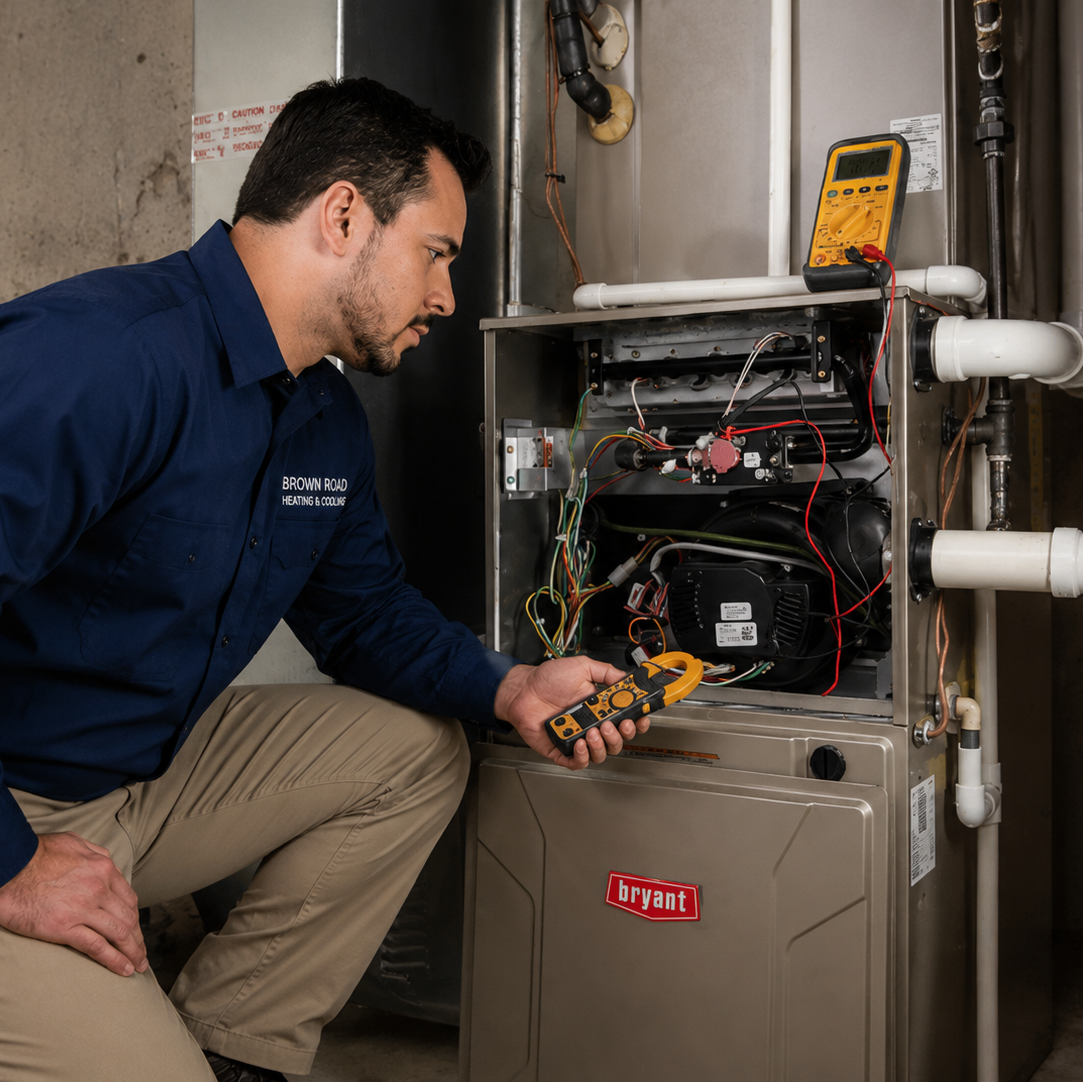
A furnace repair visit may include checking:
- Thermostat settings and response
- Air-filter condition
- Supply and return airflow
- Blower operation
- Startup sequence
- Electrical components
- Heating controls
- Visible duct concerns
- Shutdown behavior
- System operation after the approved work
We do not base our recommendation on a single symptom. We inspect the system, explain what we find, and discuss the practical options before moving forward.
Emergency Furnace Repair in MIlls River, NC
Some heating issues can wait for a scheduled appointment. Others should be handled quickly.
Turn the system off and call for help if you notice:
- A strong electrical or burning smell
- Visible smoke
- Repeated breaker trips
- Loud grinding or metal-on-metal sounds
- Scorch marks or visible equipment damage
- A furnace that repeatedly starts and shuts down
- No heat during cold weather
- An unusual fuel or combustion odor
- A carbon monoxide alarm sounding
If a carbon monoxide alarm activates, leave the building and contact emergency services. Do not remain inside trying to locate the source.
Do not repeatedly reset a tripped breaker, bypass a safety switch, or continue operating equipment that produces smoke or a persistent electrical smell.
Furnace Maintenance in Mills River
Heating equipment often sits unused through warmer months. The first sustained cold period can reveal problems that were not noticeable during a brief test.
Scheduling furnace maintenance before regular winter use gives the system a chance to be inspected while there is still time to address developing concerns.
Depending on the equipment, a maintenance visit may include:
- Checking the filter
- Testing thermostat operation
- Inspecting electrical connections
- Reviewing blower performance
- Checking supply and return airflow
- Observing startup and shutdown
- Inspecting visible equipment condition
- Reviewing heating output
- Looking for abnormal sounds or odors
- Checking venting or safety-related components where applicable
- Running the system through a complete heating cycle
Maintenance cannot guarantee that a part will never fail. It can reveal restricted airflow, worn components, control problems, loose connections, and performance changes before the system is under its heaviest load.
When Should Furnace Maintenance Be Scheduled?
Fall is usually the most practical time, before heating becomes part of the daily routine.
Earlier service may be sensible when:
- The equipment is older
- Repairs were needed the previous winter
- The building is used seasonally
- Renovations changed airflow or heating demand
- The furnace has not been checked recently
- Rooms were unevenly heated last season
Do not wait for a maintenance window when the furnace is already failing, producing unusual odors, or shutting down repeatedly.
Furnace Installation in Mills River
A furnace installation should be planned around the current building, not simply matched to the nameplate on the old equipment.
The property may have changed since the existing furnace was installed. Rooms may have been added. A garage may have become a work area. Insulation may have improved. Ductwork may have been extended or modified.
Installation planning may involve reviewing:
- Building size and floor plan
- Insulation and heat loss
- Window and exterior-wall exposure
- Existing duct condition
- Supply and return-air capacity
- Thermostat compatibility
- Equipment location
- Electrical or fuel requirements
- Venting needs where applicable
- Access for future maintenance
- Residential or light commercial use
A larger furnace is not automatically a better furnace. Equipment that is poorly matched to the property may cycle too frequently, heat unevenly, or place unnecessary stress on the duct system.
When New Furnace Installation May Make Sense
A new furnace may be appropriate when:
- New construction needs a heating system
- A remodel changed the floor plan
- An addition requires dependable heat
- Temporary heating equipment is being replaced
- The current furnace is poorly matched to the property
- Existing equipment is no longer reliable
- The furnace and duct system need coordinated improvement
- A small commercial space needs a new forced-air heating setup
We consider the equipment, airflow, ductwork, and building conditions before recommending an installation approach.
What Our Furnace Services Include
“Furnace service” is a broad term. It may refer to repairing a current problem, checking an older system before winter, or evaluating whether replacement is becoming necessary.
A service visit may involve:
- Troubleshooting a no-heat complaint
- Diagnosing weak or uneven heating
- Checking thermostat operation
- Reviewing airflow
- Performing seasonal maintenance
- Correcting a failed component
- Testing system performance
- Comparing repair and replacement options
- Planning a new furnace installation
This makes furnace service the right starting point when you know the heating system is not working normally but are not sure what type of appointment to request.
Furnace Systems and Property Types
Furnace configurations vary. The correct service approach depends on the type of equipment and its installation.
Brown Road may work with forced-air heating systems serving:
- Single-family homes
- Offices
- Workshops
- Retail spaces
- Service businesses
- Customer-facing areas
- Light commercial properties
- Furnaces paired with central air systems
When scheduling, tell us what type of furnace you have if you know. That helps us prepare for the visit and confirm that the equipment falls within our service capabilities.
How Brown Road Approaches Furnace Service
A heating appointment should leave you with a clear explanation of the issue and the next step.
1. We investigate the Symptoms
We start with what you have noticed. Is there no heat, weak airflow, uneven comfort, unusual noise, or a problem that happens only at certain times?
Knowing when the issue started and which rooms are affected helps guide the inspection.
2. We Check the Controls and Airflow
The thermostat, filter, vents, return grilles, and blower behavior can all affect heating performance. These basics are checked before assuming a major component has failed.
3. We Inspect the Furnace
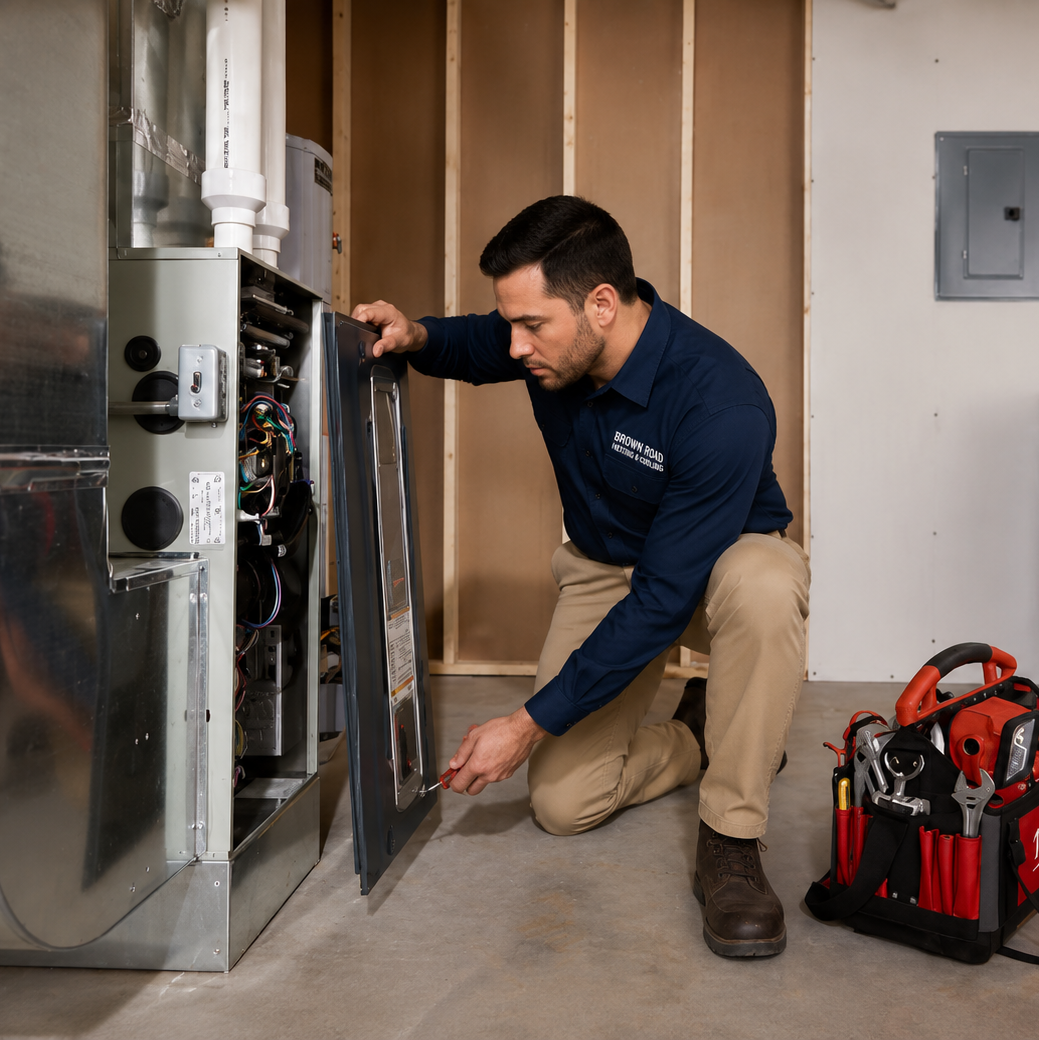
The inspection depends on the system type and reported problem. We evaluate the equipment and components for normal startup, heating, and shutdown.
4. We Test Operation
The furnace may need to be observed as it starts, runs, responds to the thermostat, and completes a heating cycle.
5. We Explain the Findings & Execute the Fix
We describe what appears to be wrong and whether repair, maintenance, installation, or replacement should be considered.
After the customer approves the work, we complete it and test the system again before wrapping up.
Furnace Replacement in Mills River
A failed part does not automatically mean the entire furnace should be replaced. At the same time, repeated repairs can become difficult to justify when the system’s overall performance continues to decline.
Repair May Make Sense When
- The problem is limited to one repairable component
- The furnace remains reliable overall
- Heating was even before the current issue
- Repair cost is reasonable
- The equipment still fits the property
- The system has a consistent maintenance history
Replacement May Be Worth Discussing When
- Breakdowns are becoming more frequent
- Repair costs continue to accumulate
- Major components are failing
- Several rooms remain cold
- The furnace runs too long without catching up
- Heating costs keep increasing
- The system no longer fits the floor plan
- Earlier repairs provided only short-term improvement
- The furnace and duct system are poorly matched
- The owner wants to plan before a winter failure
Age is part of the decision, but it should not be the only factor. Installation quality, maintenance history, operating condition, repair cost, comfort, and future plans for the property all matter.
Brown Road helps customers compare the likely value of another repair with the cost and benefits of replacement.
Heating Considerations for Mills River Properties
Mills River includes homes and businesses with varied layouts. Some properties have additions, workshops, finished garages, or rooms separated from the main living area. Others use duct systems that were modified after the original heating equipment was installed.
Heating concerns may include:
- Long duct runs
- Weak airflow in distant rooms
- Additions with different insulation
- Finished garages or workshops
- Rooms over unconditioned spaces
- Separate occupied zones
- Older equipment connected to altered ducts
- Small businesses with extended occupied hours
- Vents or equipment exposed to leaves and outdoor debris
A workshop used every weekday may need a different heating plan than a guest room used occasionally. An office near NC 280 or the airport corridor may have different operating needs than a home on a larger property.
The location matters, but the building layout and equipment condition matter more.
Furnace Service for Homes and Small Businesses
Residential customers usually call because the house is cold, airflow is weak, or the furnace has become unreliable.
Small businesses may have additional concerns:
- Maintaining employee and customer comfort
- Avoiding disruption during open hours
- Heating separate work areas
- Scheduling service around operations
- Planning maintenance before winter
- Replacing equipment before a complete failure
Brown Road provides service for qualifying light commercial systems. Describe the building and equipment when scheduling so we can confirm availability for the job.
What to Check Before Scheduling Furnace Services
A few safe checks may provide helpful information before the technician arrives.
You can:
- Confirm the thermostat is set to heat
- Raise the set temperature a few degrees
- Replace thermostat batteries if needed
- Inspect the air filter
- Make sure supply vents are open
- Move furniture away from return grilles
- Check the breaker once
- Listen for the blower
- Note new sounds or odors
- Confirm that carbon monoxide alarms are working
Do not:
- Open electrical compartments
- Work on fuel controls
- Bypass safety switches
- Attempt ignition repairs
- Repeatedly reset a tripping breaker
- Take apart the furnace
- Continue operating equipment that produces smoke
- Ignore a carbon monoxide alarm
Furnace Terms You May Hear
Blower Motor
The motor that moves heated air through the duct system.
Heat Exchanger
A component in many furnaces that transfers heat to the air moving through the system.
Igniter
A component used to begin the heating process in certain furnace types.
Flame Sensor
A safety component that confirms the presence of a flame in applicable systems.
Limit Switch
A control that may shut the furnace down when temperatures move outside the expected range.
Supply Air
Heated air delivered from the furnace to rooms through the duct system.
Return Air
Air pulled from the building back toward the furnace.
Short Cycling
A condition in which the furnace starts and stops more often than it should.
Flue or Vent
A passage used to carry combustion gases out of the building on applicable fuel-burning systems.
Forced-Air System
A heating system that uses a blower and ducts to distribute warm air.
Similar Heating Complaints Can Have Different Answers
Two customers may report the same symptom and need very different work.
A maintained furnace that suddenly stops due to a single, replaceable component failure may be a reasonable repair candidate.
A different furnace may exhibit the same no-heat symptom after years of repeated shutdowns, rising costs, weak airflow, and uneven room temperatures. That situation may require a broader discussion about replacement, ductwork, or both.
These are examples, not diagnoses. The system must be inspected before a correct recommendation can be made.
Furnace Safety and Carbon Monoxide Awareness
Fuel-burning heating systems should be handled with care.
Homeowners and business owners should:
- Maintain working carbon monoxide alarms
- Keep vents and flues unobstructed
- Schedule professional inspection of fuel-burning equipment
- Leave the building when a carbon monoxide alarm sounds
- Call emergency services from a safe location
- Turn the furnace off when smoke or a strong electrical odor appears
Do not attempt to inspect the inside of a heat exchanger or repair combustion-related components yourself.
Why Mills River Customers Call Brown Road Heating & Cooling
Brown Road Heating & Cooling is a family-owned HVAC company based in Hendersonville and serving Mills River and nearby Henderson County communities.
Customers call Brown Road for:
- Furnace diagnosis and repair
- Seasonal maintenance
- Installation planning
- Furnace replacement guidance
- Airflow and thermostat concerns
- Residential and qualifying light commercial service
- Clear explanations before work begins
- A company with a real local address and phone number
We serve Mills River from its Hendersonville location. We do not claim a separate office in Mills River.
FAQs About Furnace Repair in Mills River, North Carolina
Brown Road provides furnace repair, general service, seasonal maintenance, installation, replacement planning, and qualifying light commercial heating service.
No heat, weak airflow, cool air from vents, short cycling, uneven temperatures, unusual sounds, persistent odors, and rising heating costs may indicate a problem.
Most furnaces should be checked about once a year, commonly before regular winter use. Equipment age, usage, and service history may affect the best schedule.
Yes. Brown Road provides furnace installation for qualifying Mills River homes, renovations, additions, and small commercial properties.
Repair may make sense when the issue is isolated and the furnace remains dependable. Replacement may deserve consideration when failures are frequent, comfort has declined, and repair costs keep increasing.
Check the thermostat setting, batteries, filter, open vents, return grilles, and breaker. Call for service if the furnace still does not heat correctly.
Leave the building immediately and contact emergency services from a safe location. Do not re-enter until the property has been cleared by the appropriate professionals.
Brown Road services qualifying light commercial equipment. Describe the system and property when scheduling so we can confirm availability.
Brown Road Heating & Cooling is located at 252 Brown Road in Hendersonville and serves Mills River and other nearby communities.
Schedule Furnace Service in Mills River
If your furnace is not heating, blowing cool air, making unusual noises, or is due for maintenance before winter, Brown Road Heating & Cooling is ready to help.
Brown Road Heating & Cooling
252 Brown Road
Hendersonville, NC 28791
Call today to schedule furnace repair, furnace service, maintenance, installation, or replacement for your Mills River property.