The house doesn’t feel right, but the equipment isn’t giving you a clear answer.
Maybe the AC is running, but the rooms farthest from the system still feel warm. Maybe the heat starts, stops, and never quite catches up. Maybe the thermostat says one thing, but the living room, garage office, or upstairs bedroom feels completely different.
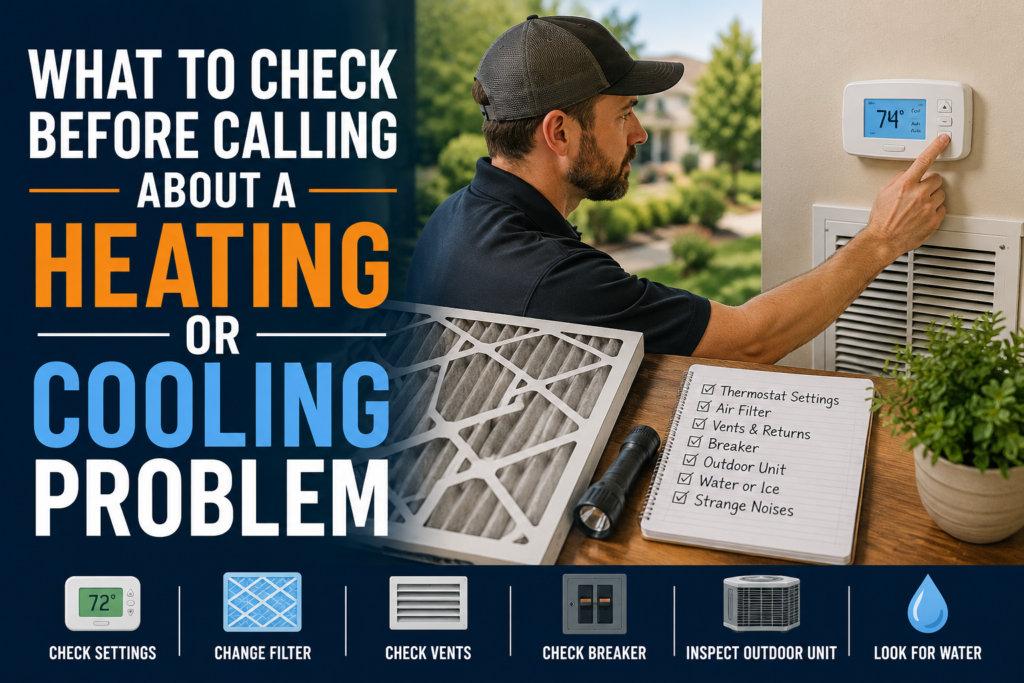
Before calling for service, there are a few safety checks Mills River homeowners can do. These steps will not replace a professional diagnosis, but they can help you rule out simple issues and give Brown Road Heating & Cooling better information when you schedule an appointment.
This is not a DIY repair guide. It is a practical checklist for settings, airflow, visible warning signs, and symptoms worth noting before a technician arrives.
Start With the Thermostat
Begin with the thermostat, because a small setting can make the whole system seem to have failed.
Make sure the thermostat is set to the desired mode. If you need cooling, check that it is set to “cool.” If you need heat, make sure it is set to “heat.” If it is on “auto,” confirm that the temperature setting makes sense for the season.
Also, check the fan setting. If the fan is set to “on,” air may keep blowing even when the system is not actively heating or cooling. That can make it seem like the HVAC system is running constantly.
A few simple thermostat checks:
- Replace batteries if the display is dim or blank.
- Make sure the schedule has not been changed.
- Confirm the set temperature is lower or higher than the room temperature, depending on the season.
- Check whether sunlight, lamps, electronics, or drafts could affect the reading.
- Compare the thermostat reading with another thermometer if one area feels very different.
If the thermostat is giving the wrong command, the equipment may be responding normally to the wrong setting.
Check the Air Filter
A dirty filter can create bigger comfort problems than many homeowners expect.
When a filter gets clogged, air has a harder time moving through the system. That can lead to weak airflow, longer run times, uneven temperatures, poor heating and cooling, and increased strain on the equipment.
Pull the filter out and look at it. If it is packed with dust, pet hair, or debris, replace it with the correct size. Make sure the airflow arrow points in the correct direction when installing the new filter.
A few reminders:
- Do not force the wrong filter size into place.
- Do not run the system without a filter.
- Do not switch to a much thicker filter without checking whether your system can handle it.
- Check filters more often during heavy summer cooling, winter heating, pet shedding, renovations, or dusty conditions.
A clean filter does not solve every heating or cooling problem, but it is one of the easiest things to check first.
Make Sure Vents and Returns Are Open
Your HVAC system needs air to move through the building. If supply vents or return grilles are blocked, the equipment may continue to run even when the property still feels uncomfortable.
Supply vents deliver heated or cooled air into rooms. Return grilles pull air back toward the equipment. Both need open space around them.
Walk through the home and look for:
- Rugs covering floor vents
- Furniture blocking registers
- Curtains hanging over vents
- Storage boxes in front of return grilles
- Closed vents in unused rooms
- Bedroom or office doors that stay closed most of the day
This can matter in Mills River homes with additions, finished garages, workshops, offices, or rooms spread across a larger layout. One area may have less airflow than the rest of the property, especially during humid summer afternoons or colder nights.
If one room is always uncomfortable, the issue may involve ductwork, insulation, room layout, airflow balance, or equipment performance.
Look at the Breaker Once
If the system will not turn on, check the electrical panel once if you are comfortable doing so.
A tripped breaker can shut down part of the HVAC system. Sometimes the indoor unit may have power while the outdoor unit does not. Other times, the whole system may stop responding.
Resetting a breaker once may help if the trip was isolated.
But do not keep resetting it.
If the breaker trips again, stop and call for service. A breaker that trips repeatedly may indicate an electrical issue, a motor problem, a short circuit, or equipment failure. Repeated resets are not a safe workaround.
Do not open electrical compartments or remove HVAC panels to investigate further.
Check Whether the Indoor and Outdoor Units Are Running
Many heating and cooling systems have both indoor and outdoor equipment. Noticing which part is running can help narrow down the issue.
During cooling, the indoor blower may run while the outdoor unit stays off. In that case, air may come from the vents, but it may not feel cool.
With a heat pump, the outdoor unit may operate during both heating and cooling. A problem may show up in one mode but not the other.
With a furnace, the blower may run even if the furnace is not producing enough warm air.
Before you call, note:
- Is air coming from the vents?
- Does the air feel warm, cool, or room temperature?
- Is the outdoor unit running?
- Does the system start and stop quickly?
- Does the problem happen in heating, cooling, or both?
- Is the equipment making a new sound?
You do not need to diagnose the cause. A clear description of what the system is doing helps the service visit get off to the right start.
Clear Space Around the Outdoor Unit
Outdoor HVAC equipment needs room for airflow. Leaves, grass clippings, weeds, shrubs, mulch, and stored items can crowd the unit, making it harder for the system to operate properly.
This can be easy to overlook on Mills River properties with larger yards, workshops, outbuildings, landscaping, or equipment stored near the house.
You can safely:
- Remove loose leaves and grass around the unit.
- Trim back shrubs and weeds.
- Move tools, bins, hoses, and yard equipment away.
- Keep the top and sides open.
- Make sure mulch or debris is not piled against the unit.
Do not remove panels, reach inside the equipment, or spray electrical components. If the outdoor unit is loud, frozen, damaged, or not starting, schedule service.
Look for Water, Ice, or Unusual Odors
Some signs mean it is time to stop checking and call a technician.
Water near indoor equipment
Water around the indoor unit may indicate a drain problem, a frozen coil thawing, a drain pan issue, or a humidity-related drainage concern. Do not ignore it, especially if water is spreading toward the flooring, walls, or stored items.
Ice on visible lines or equipment
If you see ice, turn the system off and call for service. Do not chip at the ice. Ice is usually a symptom of another problem, such as airflow trouble, coil issues, or another system condition.
Burning, electrical, or fuel odors
A brief dusty smell can happen when heat runs for the first time after sitting unused. A strong burning smell, electrical odor, smoke, or fuel smell is different.
Turn the system off if it is safe to do so and call for help. If a carbon monoxide alarm sounds, leave the building and contact emergency services from a safe location.
Pay Attention to When the Problem Happens
The timing of the problem can be useful.
Before calling, think through these questions:
- Did the issue begin suddenly or gradually?
- Is it worse in the afternoon, overnight, or during certain weather?
- Does it happen only in heating or only in cooling?
- Is one room affected, or the whole property?
- Did anyone recently change the thermostat?
- Was the filter recently replaced?
- Was furniture moved near a vent or return?
- Is there water, ice, odor, or noise?
- Does the thermostat show an error?
- Does the breaker trip?
For example, a room over a garage may be uncomfortable at times when the main living area is not. A workshop or finished garage may need different airflow or equipment planning than the rest of the home. A small business near NC 280, NC 191, I-26, or the airport corridor may also have heating and cooling needs tied to occupied hours.
The more specific you can be, the easier it is to explain the concern when scheduling service.
What Not to Try Yourself
Safe checks are one thing. Internal HVAC repairs are another.
Homeowners should not:
- Handle refrigerant
- Open electrical compartments
- Bypass safety switches
- Keep resetting a tripped breaker
- Take apart the furnace
- Repair ignition components
- Chip ice from coils or refrigerant lines
- Pour harsh chemicals into drain lines
- Ignore smoke, fuel odors, or carbon monoxide alarms
Checking settings, filters, vents, breakers, visible water, and visible ice is reasonable. Taking equipment apart is not.
When to Call Brown Road Heating & Cooling
Call for service when the system still will not heat, cool, or respond after the basic checks.
You should also schedule service if:
- Airflow is weak
- The thermostat is blank or unresponsive
- The breaker trips more than once
- Water appears near indoor equipment
- Ice forms on visible lines or equipment
- The outdoor unit does not run
- The furnace blows cool air
- The AC blows warm air
- The heat pump cannot keep up
- Rooms stay uneven
- New sounds or odors appear
- Energy bills rise without a clear reason
If the system still will not heat, cool, or respond after these basic checks, Brown Road Heating & Cooling can help with HVAC services in Mills River.
FAQs About Heating and Cooling Problems
What should I check first if my HVAC system is not working?
Start with the thermostat, air filter, breaker, vents, returns, and whether the indoor and outdoor equipment are running.
Can a dirty filter stop my system from heating or cooling?
A dirty filter can restrict airflow and reduce performance. In some systems, poor airflow can contribute to overheating, freezing, short cycling, or shutdowns.
Should I reset the breaker if my HVAC system stops?
You can check the breaker once if you are comfortable doing so. If it trips again, stop resetting it and call for service.
Why is one room hotter or colder than the rest of the property?
Possible causes include blocked vents, weak return airflow, duct issues, insulation differences, sun exposure, thermostat location, closed doors, or equipment performance problems.
Should I turn the system off if I see ice?
Yes. Turn the system off and call for service. Do not chip ice from the equipment.
Is water near the indoor HVAC unit serious?
It can be. Water may indicate a drain issue, frozen coil, or another problem that should be checked before it causes damage.
When should I call an HVAC technician?
Call when basic checks do not solve the issue, the system will not heat or cool, the breaker trips repeatedly, water or ice appears, or you notice unusual odors or sounds.
Get Help With Heating and Cooling Problems in Mills River
Some HVAC problems start with simple things: a thermostat setting, a clogged filter, a blocked return, a crowded outdoor unit, or a tripped breaker. Others involve electrical components, airflow issues, drainage problems, refrigerant-related issues, furnace controls, heat pump operation, ductwork, or worn equipment.
The safest approach is to check what you can see without opening the system. If the problem persists, Brown Road Heating & Cooling can inspect the equipment and explain whether repair, maintenance, or replacement makes sense.
Brown Road Heating & Cooling
252 Brown Road
Hendersonville, NC 28791
(828) 338-6261
Comments are closed