
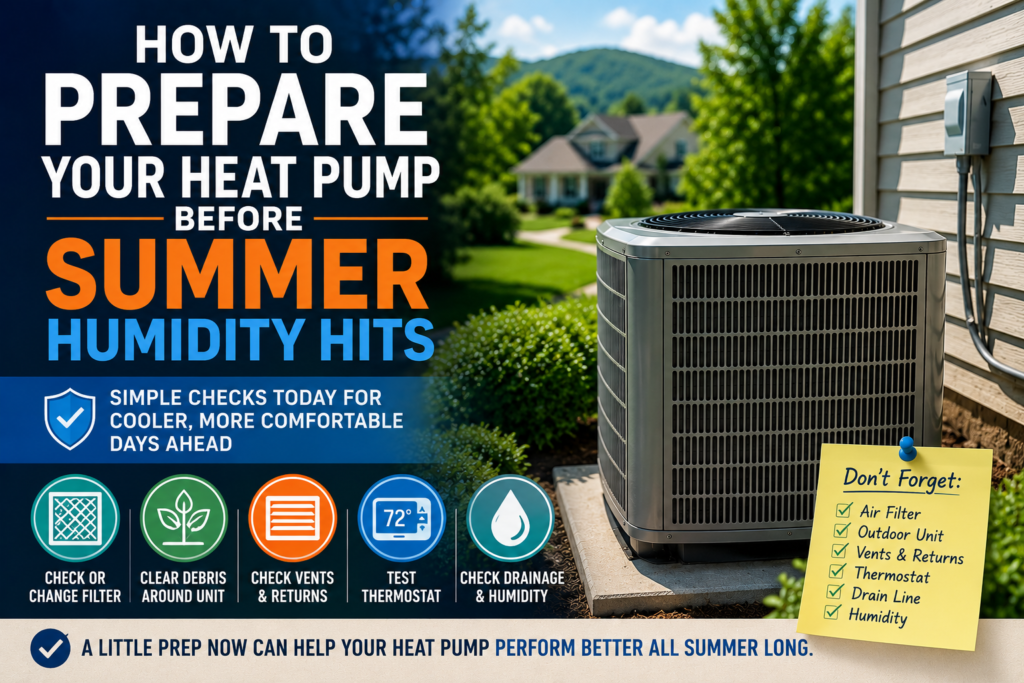
A heat pump can seem ready for summer just because it turns on. The thermostat calls for cooling, air comes through the vents, and the outdoor unit starts running.
But summer comfort in Mills River depends on more than whether the system starts. Once humid weather settles in, small issues with airflow, drainage, filters, thermostat settings, or outdoor-unit clearance can become much more noticeable.
Before the first long stretch of muggy weather, it is worth giving your heat pump a closer look. Some checks are simple enough for homeowners. Others should be handled by a technician before the system is working hard every day.
This guide is not meant to turn a homeowner into an HVAC technician. It is a practical way to spot early concerns, prepare for the cooling season, and know when to call Brown Road Heating & Cooling.
Why Summer Humidity Can Expose Heat Pump Problems
A heat pump handles both heating and cooling. In summer, it removes heat from inside the home and helps remove moisture from the air as part of the cooling process.
That moisture removal matters. A home can feel uncomfortable even when the thermostat is close to the set temperature if the indoor air still feels damp. Humidity can make rooms feel warmer, make the system run longer, and make weak airflow problems easier to notice.
Mills River homes with additions, finished garages, workshops, upstairs rooms, or spaces with different sun exposure may notice this more than others. One area may cool normally while another feels sticky or slow to respond.
When summer humidity arrives, a small performance problem can quickly become a comfort problem.
Start With the Air Filter
The air filter is one of the simplest checks, but it has a big effect on comfort.
A dirty filter restricts airflow through the system. When less air moves across the indoor equipment, the heat pump may run longer, cool less effectively, or leave rooms feeling uneven. Poor airflow can also contribute to other system issues, especially during heavy use.
Before cooling season gets underway:
- Check the filter.
- Replace it if it looks dirty or clogged.
- Use the correct size.
- Make sure the airflow arrow points the right direction.
- Do not run the system without a filter.
- Do not force a filter that does not fit.
Homes with pets, dusty conditions, recent remodeling, or heavy summer use may require more frequent filter checks. A filter that looked fine in April may not look fine after several weeks of constant cooling.
Clear Space Around the Outdoor Unit
The outdoor unit needs open airflow to do its job. If it is crowded by grass, weeds, leaves, mulch, shrubs, hoses, tools, or storage bins, performance can suffer.
This is easy to miss on properties with larger yards, landscaping, workshops, or outdoor storage areas. Spring growth can creep toward the unit before you notice it.
Walk around the outdoor equipment and look for anything blocking airflow. You can safely:
- Remove loose leaves and grass clippings.
- Trim back weeds and shrubs.
- Move yard tools, hoses, and bins away from the unit.
- Keep mulch and debris from piling against the base.
- Leave open space around the sides and top.
Do not remove panels or reach inside the unit. If the equipment is making a loud noise, vibrating heavily, covered in ice, or failing to start, schedule service rather than trying to take it apart.
Make Sure Vents and Returns Are Open
A heat pump cannot cool a home properly if air cannot move through the rooms.
Supply vents deliver conditioned air into the space. Return grilles pull air back toward the system. Both need room to work.
Before summer, walk through the house and check for:
- Rugs over floor vents
- Furniture blocking registers
- Curtains hanging over vents
- Boxes or storage in front of returns
- Closed vents in unused rooms
- Doors that stay shut most of the day
Airflow issues often show up in rooms at the edge of the duct system, spaces over garages, finished bonus rooms, additions, or offices that are used differently from the rest of the house.
If one room always feels warmer or more humid, the issue may not be the thermostat alone. It could involve ductwork, return airflow, insulation, room layout, or the way the space is used.
Test the Thermostat Before the Weather Turns Hot
The thermostat is the control point for the system. If it is set incorrectly or reading the wrong area of the home, the heat pump may run at the wrong times or fail to respond the way you expect.
Before cooling season, check:
- The thermostat is set to cool.
- The set temperature is reasonable.
- The schedule or program has not changed.
- The fan setting is understood.
- Batteries are fresh if the thermostat uses them.
- The thermostat is not affected by sunlight, lamps, electronics, or drafts.
A heat pump may run longer than expected if the thermostat is misreading the room, following an old schedule, or set to a fan mode the homeowner did not intend.
Also, pay attention to where the thermostat is located. A hallway that stays cooler than the rest of the house may not represent a sunny room, garage office, or addition.
Watch for Drainage Problems
During the cooling season, your heat pump removes moisture from indoor air. That water has to drain away from the indoor equipment.
When the weather is humid, drainage issues can become more noticeable because the system pulls more moisture from the air.
Watch for:
- Water near the indoor unit
- Damp flooring around equipment
- Musty odors
- A system that shuts off unexpectedly
- Indoor humidity that stays high
- Dripping or staining near the air handler
Do not ignore water around HVAC equipment. A clogged or restricted drain can cause comfort issues, system shutdowns, or water damage.
Do not pour harsh chemicals into drain lines or bypass drain safety switches. If water is showing up near the equipment, have the system checked.
Pay Attention to Weak Airflow
Weak airflow can make a heat pump work harder than it should. It can also reduce cooling performance and make humidity harder to control.
Airflow issues may come from:
- A dirty filter
- Blocked vents
- Blocked returns
- Blower problems
- Duct restrictions
- Dirty indoor components
- Closed interior doors
- Layout changes or additions
Before calling, notice whether weak airflow affects the whole home or only certain rooms. Does it change when doors are open? Is it worse in the afternoon? Did the same room have trouble last summer?
Those details help a technician determine whether the issue may be equipment-related, airflow-related, or related to the home’s layout.
Check Whether the Outdoor Unit Runs Normally
When the system is cooling, the outdoor unit should be part of the process. A heat pump may blow air inside even when the outdoor equipment is not operating correctly.
From a safe distance, check whether the outdoor unit starts when cooling is active. Also note any new sounds, short starts, repeated stopping, heavy vibration, or failure to start.
Do not keep resetting a breaker if the unit loses power. Do not remove panels or reach into the equipment.
A system that starts and stops repeatedly, hums without starting, or trips a breaker needs professional attention.
Do Not Forget Last Summer’s Symptoms
Many homeowners remember cooling problems only after the next hot spell arrives.
Think back to last summer. Did the system run all afternoon without catching up? Did one room stay damp? Did the outdoor unit make a noise you meant to ask about? Did the system freeze once and then seem fine again? Did the electric bill climb more than expected?
Those are worth mentioning before cooling season begins.
Common problems that should not be ignored include:
- Long run times
- Weak airflow
- Uneven rooms
- High indoor humidity
- Water near the indoor unit
- Ice on visible lines or equipment
- Outdoor-unit noise
- Breaker trips
- A thermostat setting that had to be lowered more than usual
Mild spring weather can hide issues. Humid summer weather usually brings them back.
What Homeowners Should Not Try Themselves
There are plenty of safe checks homeowners can make. Internal HVAC repairs are different.
Do not:
- Handle refrigerant
- Open electrical compartments
- Bypass safety switches
- Take apart the indoor unit
- Keep resetting breakers
- Chip ice off coils or refrigerant lines
- Pour harsh chemicals into drains
- Continue running equipment with smoke or electrical odors
- Reach inside outdoor equipment
Checking the filter, thermostat, vents, returns, outdoor clearance, and visible warning signs is reasonable. Repairs involving electrical components, refrigerant, controls, coils, motors, or internal equipment should be handled by a trained technician.
When to Schedule Professional Heat Pump Maintenance
Pre-summer maintenance is worth scheduling when the system hasn’t been checked recently or when last year’s cooling performance wasn’t as it should have been.
Call for service if:
- The heat pump ran constantly last summer
- Rooms stayed humid
- Airflow feels weak
- The outdoor unit is noisy
- Water appears near indoor equipment
- Ice forms on visible components
- The system struggles to reach the thermostat setting
- The thermostat seems inaccurate
- The property has additions, workshops, or rooms that never stay comfortable
If your system needs more than a basic seasonal check, Brown Road Heating & Cooling can help with heat pump service in Mills River.
FAQs About Preparing a Heat Pump for Summer
Should I service my heat pump before summer?
Yes. A pre-summer check can help identify airflow, drainage, thermostat, outdoor-unit, and performance issues before the system is under heavier cooling demand.
Can a dirty filter make my heat pump struggle in summer?
Yes. A dirty filter can restrict airflow, reduce cooling performance, prolong system run time, and contribute to uneven comfort.
Why does my house feel humid when the heat pump is running?
Possible causes include weak airflow, dirty components, drainage problems, thermostat issues, system sizing, or a heat pump that needs service.
What should I check around the outdoor unit?
Look for leaves, weeds, grass clippings, shrubs, mulch, hoses, tools, or stored items that may block airflow around the unit.
Should I turn off my heat pump if I see ice?
Yes. Turn the system off and call for service. Do not chip the ice off. Ice usually points to another problem that needs to be diagnosed.
How do I know if my heat pump needs repair instead of maintenance?
Repair may be needed when the system will not cool, has weak airflow, trips a breaker, leaks water, makes loud noises, freezes, or cannot reach the thermostat setting.
Can Brown Road service heat pumps in Mills River?
Yes. Brown Road Heating & Cooling serves Mills River from its Hendersonville location.
Get Your Heat Pump Ready Before Humid Weather Arrives
Summer humidity can reveal problems that were easy to miss during milder weather. A heat pump may still run, but that does not always mean it is cooling well, moving enough air, draining properly, or keeping humidity under control.
Before summer settles in, check the filter, thermostat, vents, returns, outdoor unit, drainage, airflow, and any symptoms you noticed last year. Leave electrical, refrigerant, and internal equipment repairs to a technician.
Brown Road Heating & Cooling can inspect your heat pump and help determine whether maintenance, repair, or replacement planning makes the most sense.
Brown Road Heating & Cooling
252 Brown Road
Hendersonville, NC 28791
(828) 338-6261
Comments are closed